
Puzzle Peace
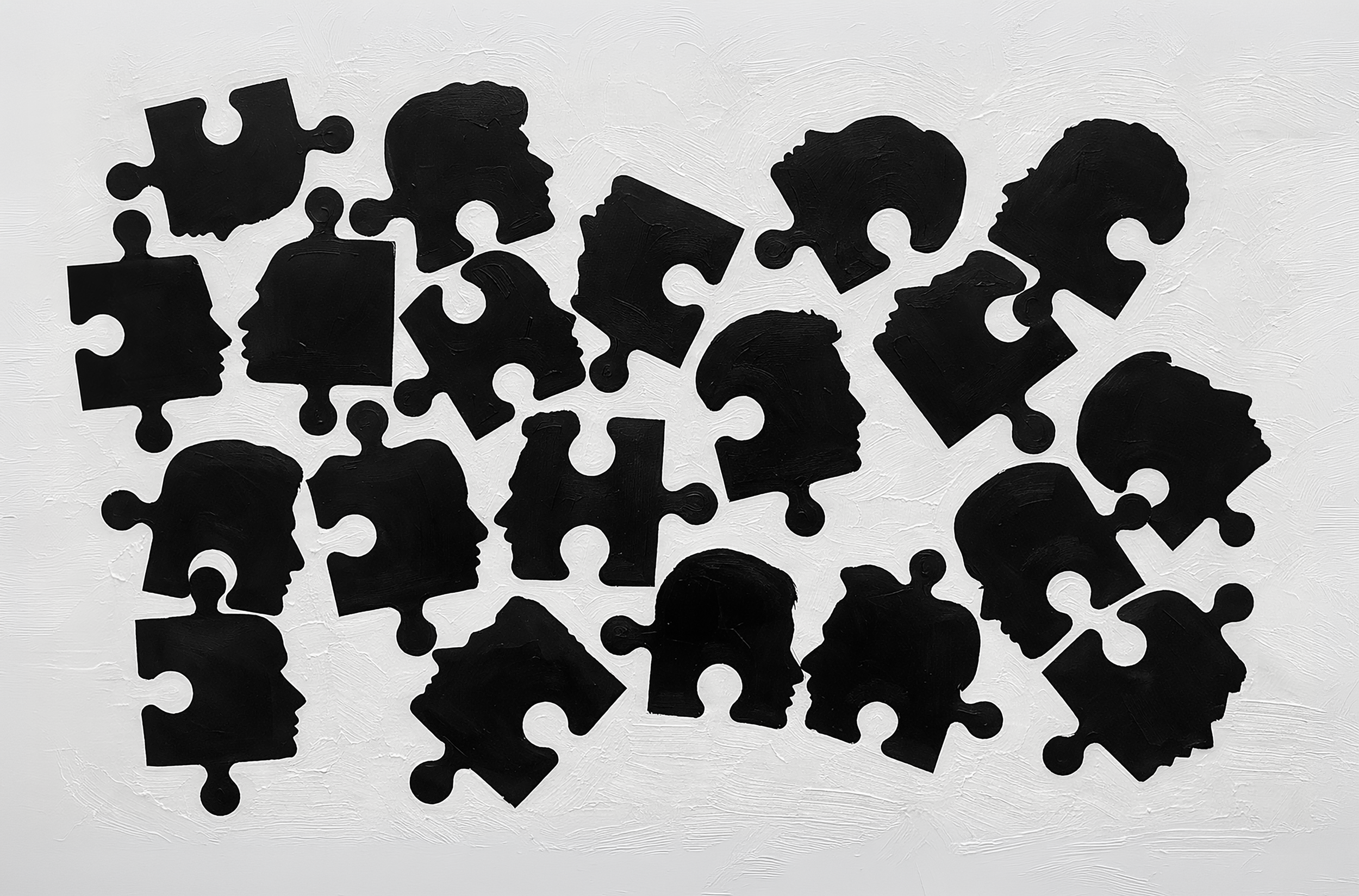
Puzzle Peace · 2026 · Acrylic on canvas
I recently discovered Myriam Fassio’s work on family constellations. The micro and macro mirroring of our universe has always fascinated me: a cell under a microscope resembles a city seen from the sky. An iris looks like the Earth... Life echoes itself everywhere, through patterns and structure. Nothing truly exists in isolation.
Family constellations, created by Bert Hellinger in the 80s, explore how visible and invisible family dynamics (biological, emotional, and symbolic) shape us. While traditional models focus on personal history and cognition, Hellinger’s approach shifts the lens toward hidden forces: loyalty patterns, inherited tensions, and unresolved identifications. Think of yourself as a star within a constellation. No star exists alone. It is part of a larger system, itself embedded in something even larger. Individual experience, from this perspective, is never purely individual. What we experience as personal (distress) is often a movement within a narrative much larger than our own.
This profoundly echoes the Jewish mysticism I am so passionate about. In Kabbalah, a person is never isolated but part of an energetic chain. Our identity is shaped through visible and invisible links. Even something as simple as a name participates in this field. Names are less labels than symbolic imprints. They hold memory and projection. Sharing the name of a deceased relative, particularly one marked by a heavy fate, inevitably colors our own story. In Hebrew, this relationship is even more explicit since letters are also numbers (gematria). Language operates as a code: symbolic, mathematical, and energetic. Identity, language, and structure are inseparable.
From this standpoint, struggles are movements within larger systems requiring Tikkun: repair or realignment. TCM similarly reads symptoms as pattern-level imbalances. Hindu philosophy speaks of samskaras. Modern science speaks of homeostasis. Different languages, same energetic architecture.
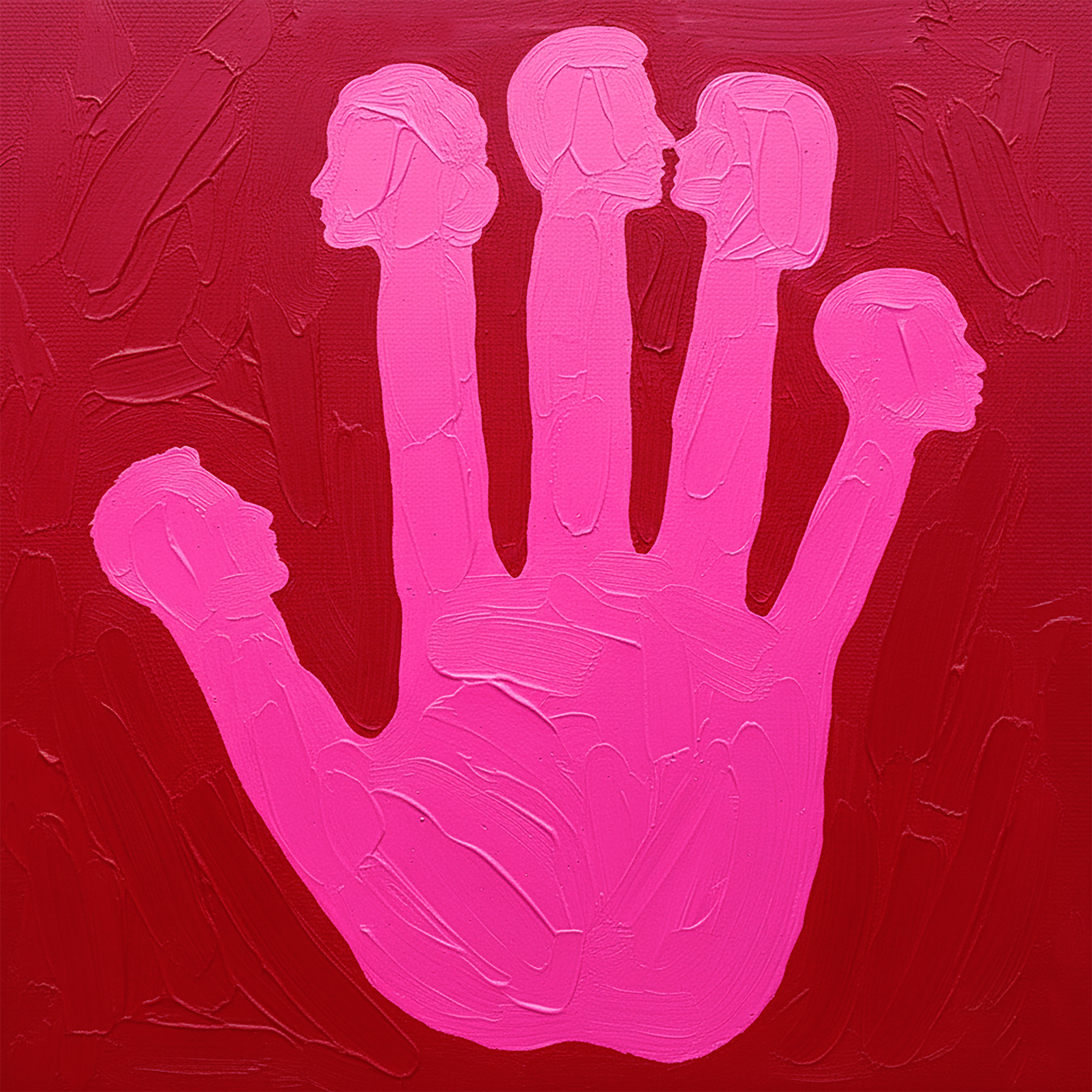
This logic feels deeply intuitive to me as a painter. When people talk about a color — say pink — they rarely realize that a color never exists independently. Its intensity, temperature, and vibrancy are entirely shaped by the colors surrounding it. The same pink can appear muted or explosive depending on its context. Friends will say “these colors are different,” while they are objectively identical. My eyes catch it immediately due to years of painting and training in color relationships, yet the illusion never ceases to amaze me. Colors reveal, amplify, or neutralize each other. People are the same. Perception is never absolute. Meaning emerges through relationships. Your environment frames how you are read by others, and how you define yourself.
“If you judge a fish by its ability to climb a tree, it will spend its life believing it is stupid.” — Einstein
Myriam Fassio extends this into what I call an “algorithm of perception”. We don’t meet people neutrally, but through “colored glasses”, inherited filters shaped by early bonds. They influence what we see as attraction, conflict, resonance... Nothing happens randomly. People who become close always share a similar core sensitivity or wound (which is not inherently bad), yet express it differently. What therapists call survival mechanisms. Two best friends may share a wound of emotional neglect: one chases validation loudly, the other retreats into silence. To the naked eye, they are opposite. To the artist, or therapist, they are one the same frequency. The same wound/intensity, painted with different hues. The beauty of their connection lies in recognition. They feel seen, and sense the vibration beneath the paint.
My visual brain reads this as composition rather than pathology. Not lack, but form. Not a hole, but negative space. Shapes that recognize, attract, and fit each other. The puzzle metaphor is not only poetic. It is energetically true. Human connection is relational architecture built on complementarity and tension: magnetism. We don't just meet, we are pulled. This was the catalyst for my last painting series, Puzzle Peace. Belonging is not about “fitting in,” but aligning our truest form so our edges can meet others, forming a larger piece… or peace.
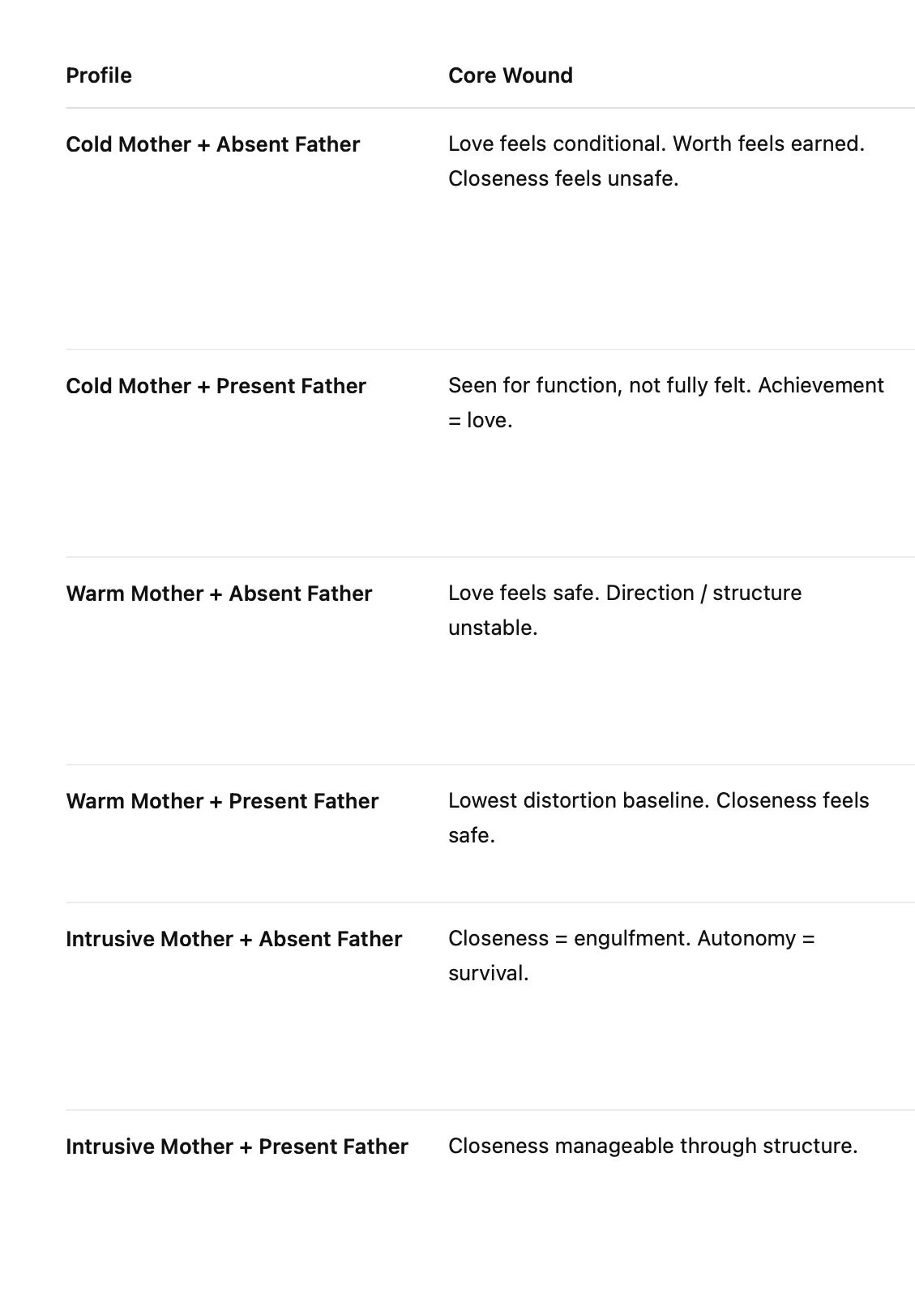
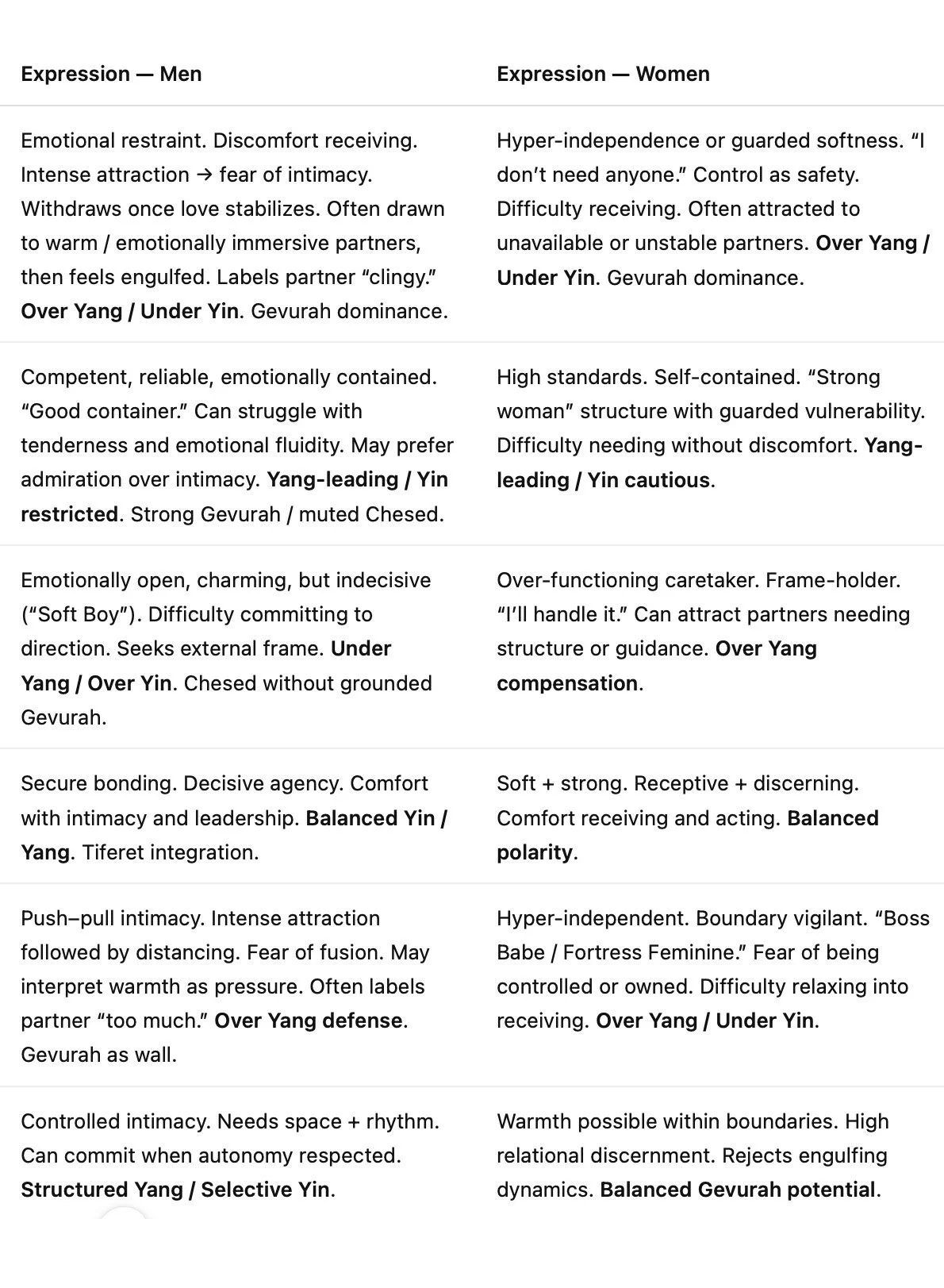
Fassio’s templates mirror ancient polarities about development:
— The Mother: shapes self-worth, emotional safety, and feminine authority. In Kabbalah, she is lunar: interior, fluid, beauty, the circle.
— The Father: shapes self-confidence, agency in the external world, and masculine authority. In Kabbalah, he is solar: exterior, structure, direction, the square.
Recurring struggles reveal which template dominates our perception. When these are distorted, our "puzzle piece" loses its edge and we stop fitting into the world and start fighting it. Some argue this is simplistic, but clarity requires simplification. A map isn't the landscape, but we’d be lost in the woods without one. Categories are not cages, they are lenses.
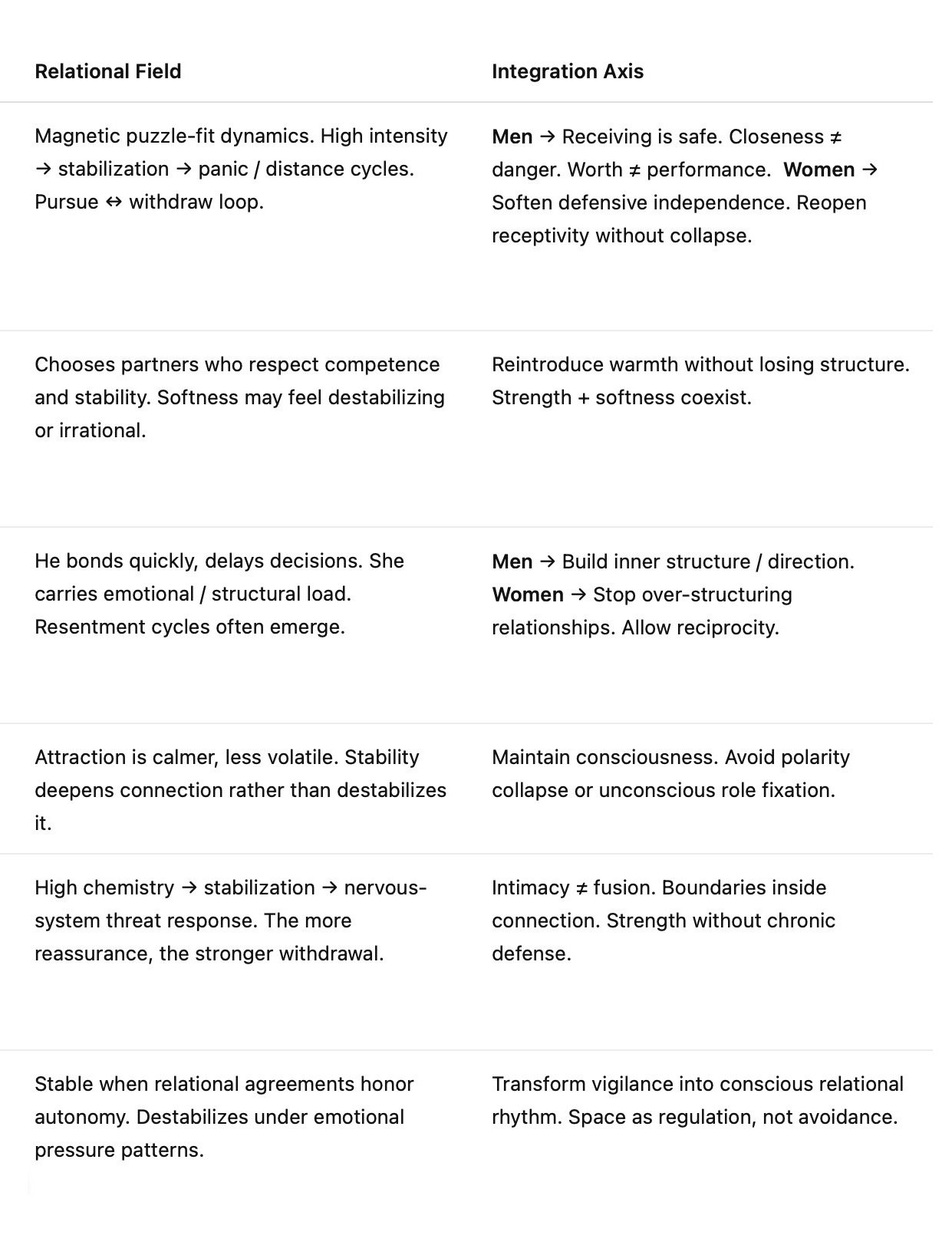
Across eras and civilizations, the convergence is striking. Whether it is the Klipot (perceptual shells) of Kabbalah, the doshic imbalances of Ayurveda, or the shadow of Jungian individuation, it’s all the same territory. The work is not about erasing wounds, but metabolizing inherited patterns into consciousness. I once met a woman who recovered a suppressed memory of rape after ten years of amnesia, only to discover her mother, grandmother, and sister carried the exact same trauma. She became the first to speak it, effectively reorganizing the field so her daughter wouldn’t have to. Expression itself realigned her; something shifted both internally and externally. By speaking the truth, she didn't just heal herself; she reshaped the geometry of her entire lineage. She smoothed the edges of a jagged, inherited piece so that the next generation could finally lock into a place of safety. This is the ultimate aim of the work: to stop being a reaction to the past and start being a conscious part of the whole.
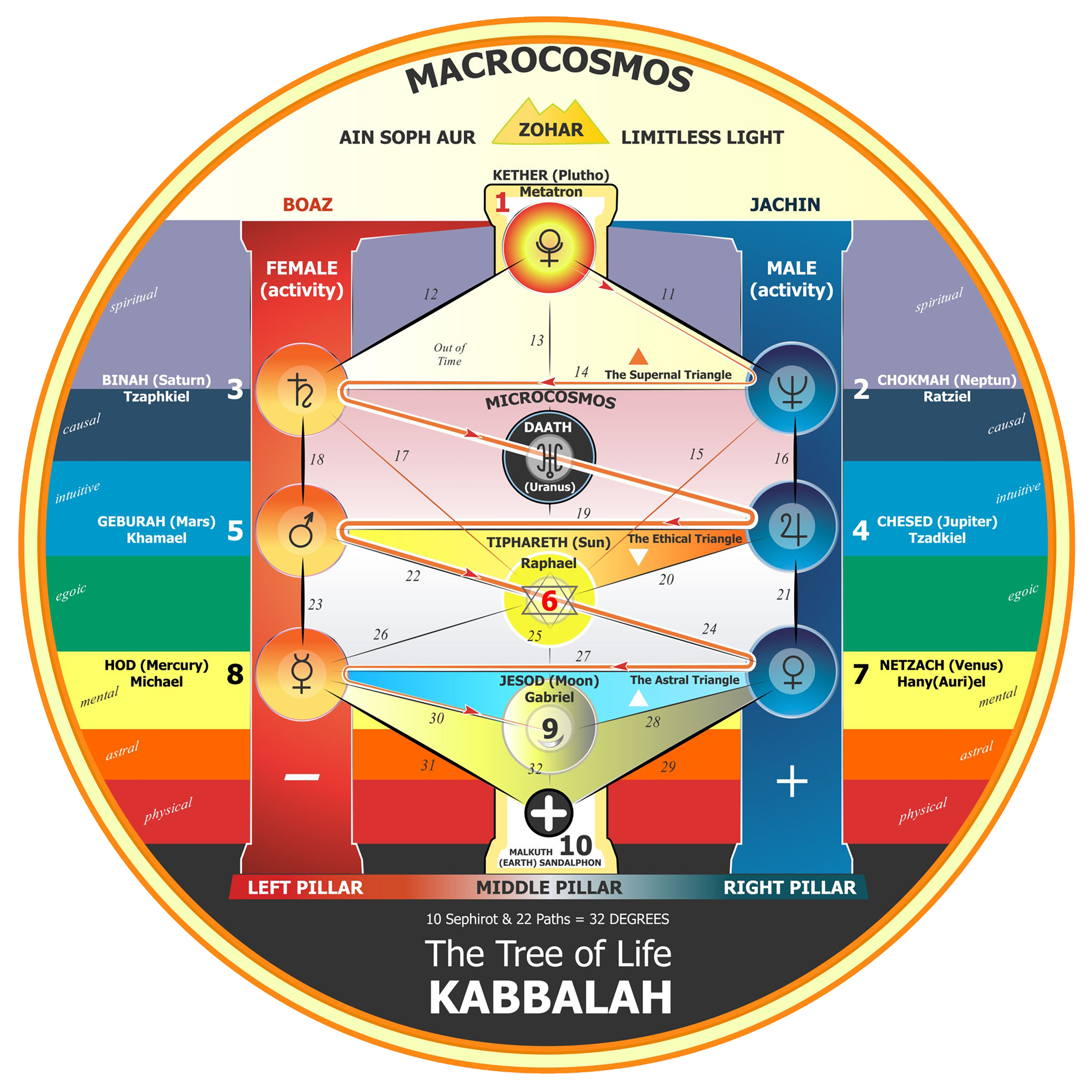
At the time, I didn't know about Constellations. I only knew of transgenerational memory and how somatic approaches recognize that unresolved trauma lives in the body. I was already immersed in the mysticism that views synchronicities not as random events, but as a "strangely intelligent" reality communicating with us. Most miss these signs and messages by living entirely in their heads, yet the more we lean into intuition, the more the Universe / Source / God guides us. It’s worth noting that Constellations, Kabbalah, and Jungian psychology don’t aim for perfection. None of us are broken. The goal isn’t to become “only love and light,” despite what IG influencers preach. Growth isn't about transcending our humanity, but inhabiting it, shadows and all. Life is about polarity. Pain and joy are not opposites to be eliminated, but conditions that define each other. Integration, not transcendence, is the movement. And it’s a forever, non-linear one.
Science explains the how, but art and spirituality explain the why. This work isn't about erasing our unique "puzzle shape" or pathologizing our triggers. It’s about learning to love the unique edges formed by our history. Love, agency, and real choices require one thing: consciousness.